目次
Introduction|How Shibori Completes the Sake Brewing Process
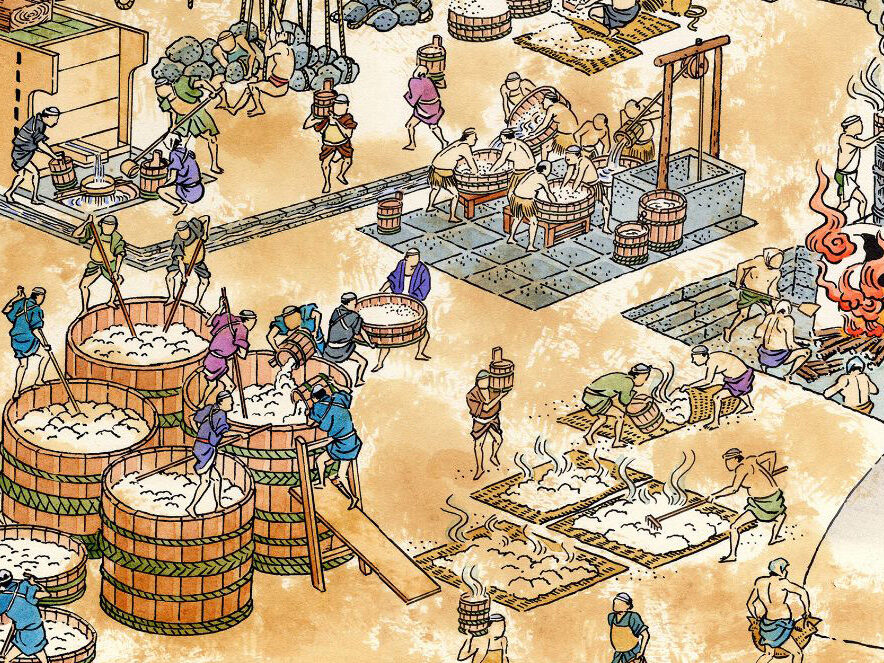
The final major stage of sake brewing is “shibori(絞り)”, the pressing process.
Here, the fermented moromi mash is separated into sake (liquid) and sake lees (solid).
In other words, shibori is the moment when sake truly becomes “drinkable” sake.
Depending on the timing and method of pressing, subtle differences in flavor and aroma arise.
What Is “Shibori” ?
Separating Moromi into Sake and Sake Lees
Once fermentation is complete, the moromi mash moves on to the shibori stage.
Through this process, the mixture is separated into clear sake and solid sake lees.
| Stage | Description |
|---|---|
| Before pressing | Fermented moromi (a mix of liquids and solids) |
| After pressing | Clear sake and sake lees (pressed rice residue) |
Since the pressing method influences aroma, mouthfeel, and clarity,
each brewery carefully chooses its technique and timing.
How Pressing Timing Affects Sake Flavor
The timing of shibori significantly impacts the final flavor.
| Timing | Characteristics | Flavor Influence |
|---|---|---|
| Early pressing | Fresh moromi | Lighter, more aromatic sake |
| Longer fermentation | Further yeast breakdown | Deeper, richer flavor |
During the “new sake” season (winter to spring), fresh-pressed young sake is popular.
On the other hand, allowing a longer fermentation before pressing produces sake with deeper umami and maturity.
Main Sake Pressing Methods
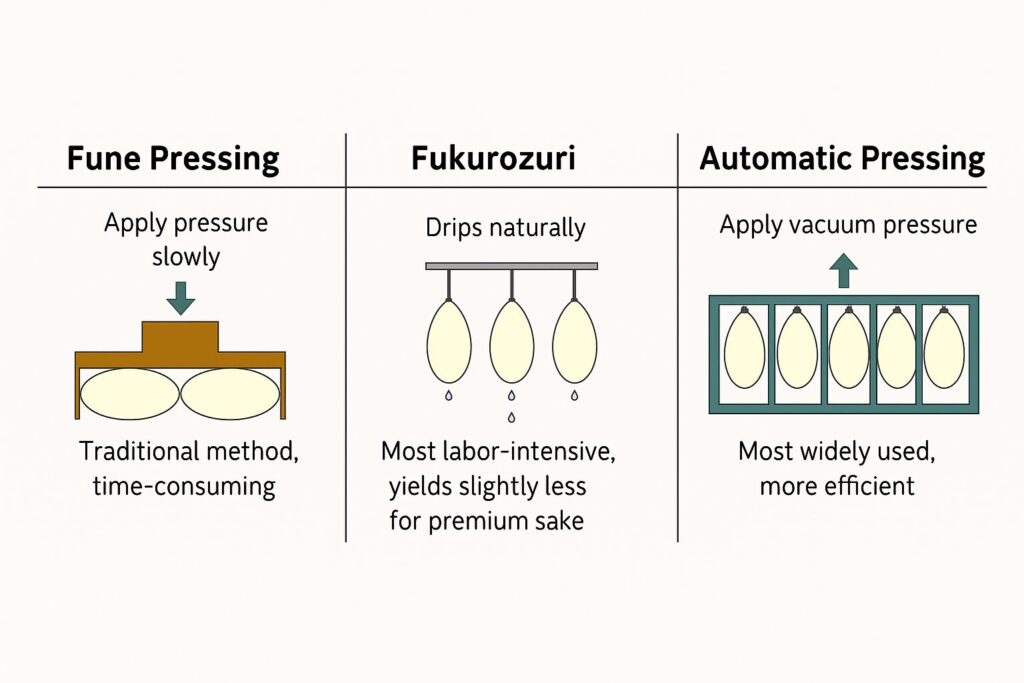
1. Yabuta Pressing (Automatic Pressing)
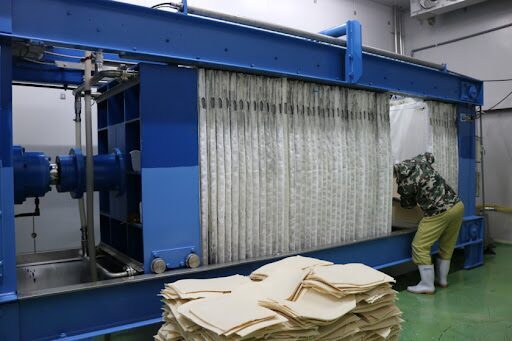
[Overview]
A large metal machine presses the moromi between filters and plates.
[Benefits]
High efficiency, ideal for large-scale production.
[Flavor Trend]
Produces clear, clean-tasting sake.
Many modern breweries use this method today.
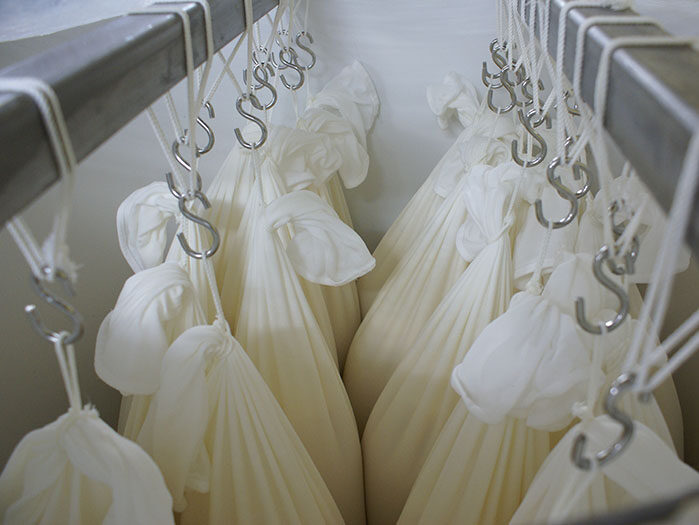
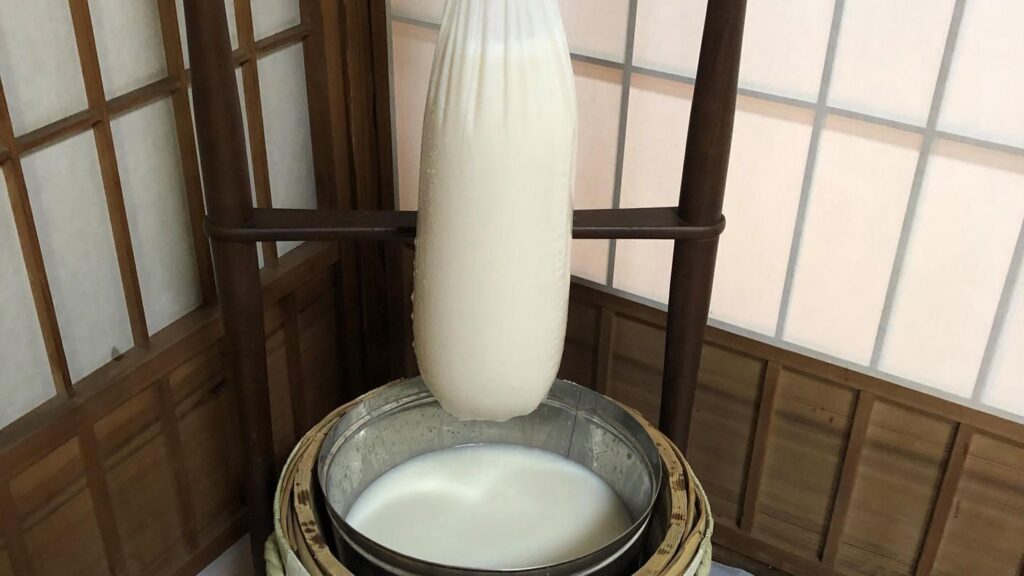
2. Fukurozuri (Drip Pressing)
[Overview]
Moromi is placed into cloth bags and hung, allowing sake to drip naturally without pressure.
[Benefits]
Retains delicate aromas and flavors.
[Flavor Trend]
Elegant and transparent sake, often for competition or premium releases.
This method is also known as “shizuku-zake” (drip sake) or “shizuku-tori.”
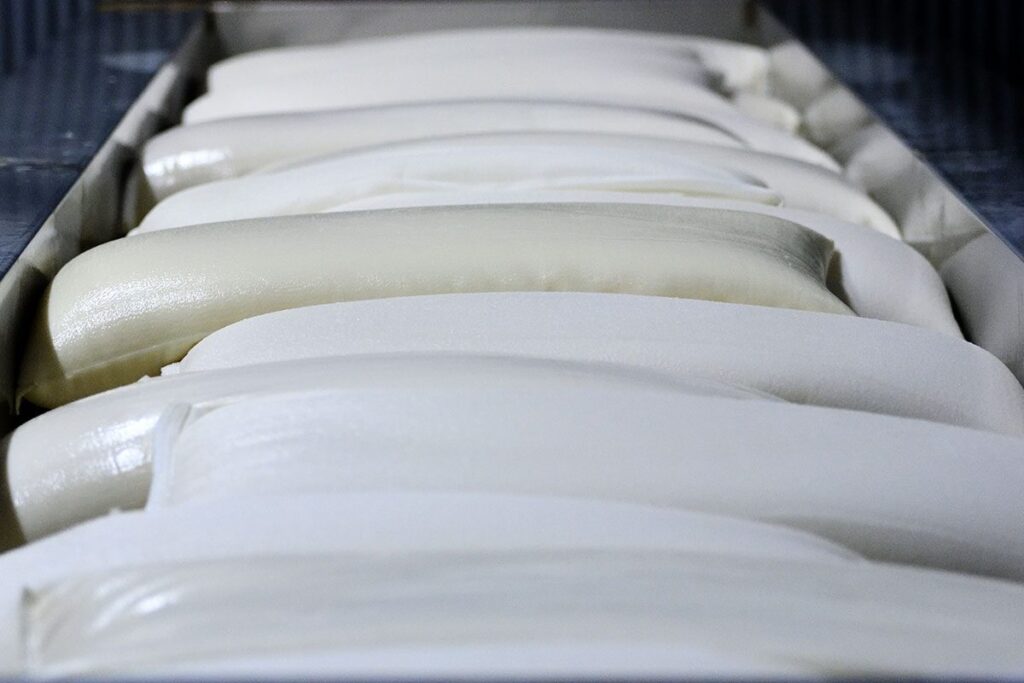
3. Fune Pressing (Traditional Boat Press)
[Overview]
Cloth bags of moromi are stacked in a traditional wooden or metal trough (fune), and sake is pressed by weight or gentle pressure.
[Benefits]
Allows careful manual control.
[Flavor Trend]
Rich, classic flavor with pronounced umami.
What Are Arabashiri, Nakadori, and Seme?
Even during the pressing process, the quality of sake changes over time.
Thus, the sake is divided into different lots depending on when it is collected:
| Name | Timing | Characteristics |
|---|---|---|
| Arabashiri (First Run) | First sake to flow | Fresh, lively, and somewhat rough flavor |
| Nakadori (Middle Press) | Midway through pressing | Well-balanced and of the highest quality |
| Seme (Final Press) | Last portion pressed | Heavier, with more body and possible roughness |
If you see these labels, pay attention to how the flavor might differ!
Conclusion|Shibori Is the Final Artistic Touch in Sake Brewing
Shibori is a crucial final step that shapes the ultimate character of sake.
The method and timing can produce remarkably different flavors—even from the same moromi.
Key Takeaways
- Shibori separates moromi into sake and sake lees.
- The timing of pressing affects sake’s freshness and depth.
- Different methods (Yabuta, Fukurozuri, Fune) create unique flavor profiles.
- “Arabashiri,” “Nakadori,” and “Seme” offer different taste experiences based on the pressing stage.
Next time you pick a bottle of sake, look for notes about the pressing method or “Nakadori.”
Understanding the care taken during the final drops will deepen your appreciation even further.
You Might Also Like

![[Complete Guide] What Is the Zenkoku Shinshu Kanpyokai? Japan’s Top Sake Competition](https://craftsakeworld.jp/wp-content/uploads/2025/04/z-1-e1745057660970.webp)