Introduction|The Art Behind Japanese Sake Brewing
“How is Japanese sake actually made?”
Even if you enjoy drinking sake, the production process might not be well-known.
Japanese sake is a masterpiece crafted from just a few simple ingredients—rice, water, koji, and yeast—through numerous meticulous steps.
It is the result of deep knowledge, skill, and time.
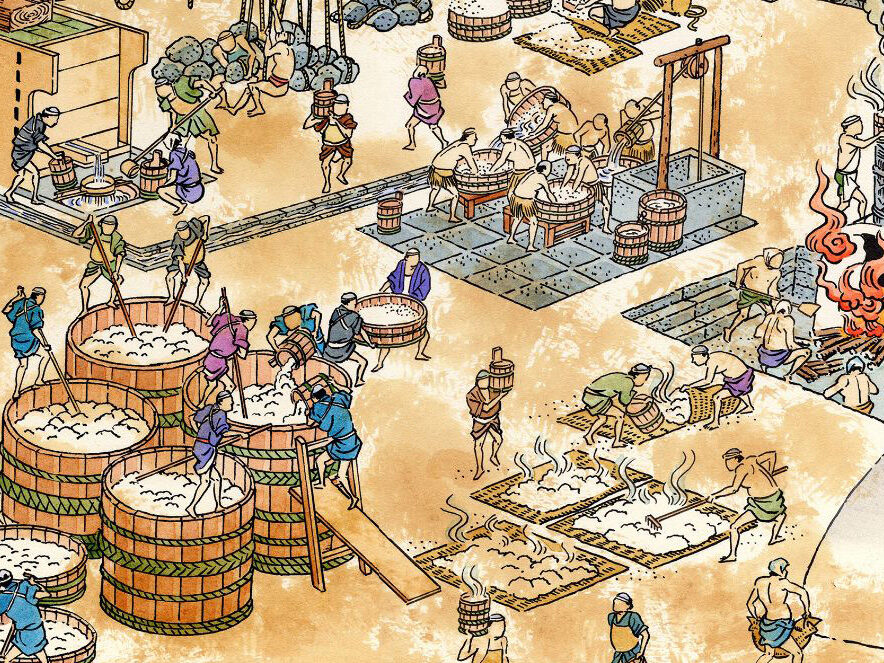
This article will clearly explain the entire sake-making process step by step.
By the end, you’ll appreciate Japanese sake on a much deeper level.
Main Ingredients of Japanese Sake
Japanese sake is made primarily from four ingredients:
- Rice (Sakamai): Specially cultivated sake rice with a white opaque center called shinpaku.
- Water: Used in nearly every stage, from washing rice to brewing; water hardness affects flavor.
- Rice Koji: Steamed rice inoculated with koji mold, which converts starch into sugar.
- Yeast: Microorganisms that ferment the sugar into alcohol and produce unique aromas and flavors.
The delicate balance of these ingredients creates the wide variety of sake flavors we enjoy today.
Sake Brewing Process
The sake production process generally follows these steps:
- Rice Polishing (Seimai)
- Washing, Soaking, and Steaming
- Koji Making
- Yeast Starter (Shubo) Preparation
- Main Fermentation (Moromi) – Three-Stage Addition
- Pressing (Joso)
- Pasteurization, Storage, and Bottling
Let’s take a closer look at each stage.
1. Rice Polishing (Seimai)

“Rice polishing” removes the outer layers of brown rice, which are rich in proteins and fats that can cause off-flavors.
The degree of polishing is indicated by the seimai buai(精米歩合) (polishing ratio):
- 70%: Suitable for Honjozo and Junmai Sake—rich and full-bodied.
- 60%: For Ginjo Sake—light and fruity aromas.
- 50% or less: For Daiginjo Sake—elegant and refined flavors.
The more the rice is polished, the closer it gets to the pure starchy center (shinpaku), refining both flavor and aroma.
2. Washing, Soaking, and Steaming the Rice

After polishing, rice undergoes three crucial steps:
- Washing: Removes excess rice bran powder for a cleaner flavor.
- Soaking: Precisely controls water absorption—timing is critical.
- Steaming: Rice is steamed (not boiled) to achieve ideal firmness and stickiness.
These preparations are vital for successful koji cultivation and fermentation.
3. Koji Making

“Koji making” (seikiku) is one of the most critical stages in determining sake flavor.
Steamed rice is sprinkled with koji mold and carefully cultivated over two days in a special high-humidity room called a koji muro.
The resulting rice koji breaks down starches into sugars, providing essential nutrients for yeast fermentation.
4. Yeast Starter (Shubo)

The shubo is like a starter culture to nurture active yeast populations.
Steamed rice, rice koji, water, and yeast are combined and allowed to ferment on a small scale over two weeks.
There are different methods:
- Sokujo-moto: Quick starter method using added lactic acid (modern and stable).
- Kimoto/Yamahai: Traditional methods using natural lactic acid fermentation, producing richer, more complex flavors.
5. Main Fermentation (Moromi)

Once the yeast starter is ready, more steamed rice, rice koji, and water are added to create the moromi (main mash).
Sake brewing uses a unique “three-stage addition” process:
- First Addition → Second Addition → Final Addition
This gradual build-up encourages healthy fermentation, enabling simultaneous multiple parallel fermentations (starch to sugar and sugar to alcohol), which are unique to sake and create its deep umami and aroma.
6. Pressing

After fermentation, the moromi mash is pressed to separate the liquid sake from the solid sake lees.
Pressing methods include:
- Yabuta Press: Standard mechanical pressing.
- Fukurozuri (Drip Pressing): Gently collected sake, often used for competitions or premium sake.
- Traditional Fune Press: Classical manual pressing method.
7. Pasteurization, Storage, and Bottling

Freshly pressed sake is still alive with active yeast and enzymes, making it unstable.
Thus, it undergoes pasteurization at around 60–65°C to stabilize the flavor.
- Two Pasteurizations → Standard sake (seishu)
- One Pasteurization → Namachozo sake
- No Pasteurization → Nama sake (requires refrigeration)
After maturing in tanks or bottles for several months, the sake is ready for shipment.
Conclusion|Deepening Your Appreciation of Japanese Sake
Japanese sake is the product of a delicate balance between simple ingredients, microorganisms, and human skill.
Understanding each step of the process will surely deepen your appreciation and enjoyment of sake.
You Might Also Like